
Optimize Content for ChatGPT and Perplexity
Practical AEO/GEO tactics: citation-friendly structure, entity coverage, source signals, statistics formatting, brand-mention strategies.
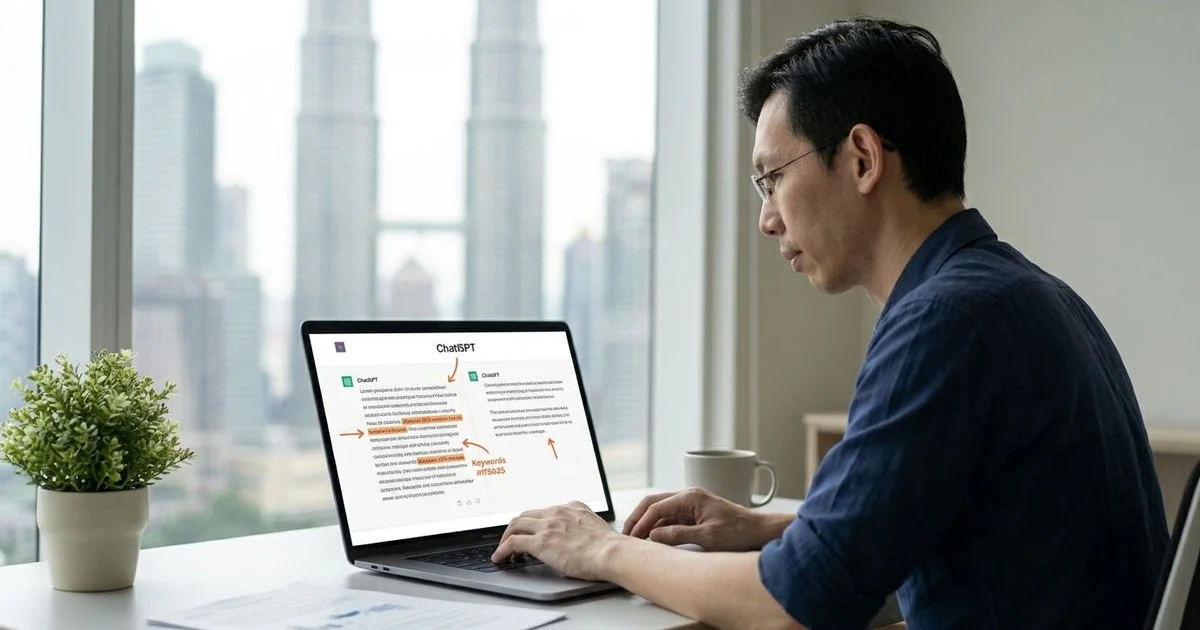
The Tactical Layer of AEO/GEO
We all see the dashboards showing traditional organic clicks dropping this year. This decline happens because users are getting their answers directly from AI summaries.
Our strategy shifts to Generative Engine Optimization to capture this new behaviour.
It focuses entirely on becoming the cited source when you optimize for chatgpt search and other AI engines. We have found that traffic from platforms like Perplexity converts at around 14.2%, compared to the standard 2.8% for traditional Google clicks. Capturing that high-intent traffic is the real prize.
We founded Adam SEO back in 2011 under the guidance of SEO veteran Adam Yong, building on the premise that search rankings mean nothing without tangible business results. This principle applies perfectly to AI visibility.
Let’s break down the exact playbook to lift your AI-citation probability across ChatGPT, Perplexity, Claude, and Google AI Overviews.
We will cover five specific categories of work and show you the exact implementation order to use.
1. Direct-Answer First Sentences to Optimize for ChatGPT Search
The single highest-impact AEO tactic is starting every section with a direct, complete answer. We instruct our writers to use the Answer, Entity, Data (AED) pattern for every new paragraph. This approach immediately gives the AI the exact extraction it needs.
Our internal testing aligns with discussions in Reddit’s B2B marketing community, where restructuring into a Q&A format increased citation rates by nearly 300%. AI engines disproportionately extract those first two sentences.
You must place the most critical information right at the top. We see many Malaysian businesses burying the lead behind long introductions. Stop doing that immediately.
| Before (Traditional SEO) | After (AEO-Optimised) |
|---|---|
| “There are several factors to consider when choosing between SEO and Google Ads. Each has its own strengths and weaknesses, and the right choice depends on your business…" | "Choose Google Ads if you need traffic in days; choose SEO if you need a compounding asset over 6-12 months. Most Malaysian SMEs run both at a 60/40 ads-to-SEO split in year one, flipping to 30/70 by year two.” |
We know the “After” version works perfectly for perplexity seo and AEO. The AI finds the exact answer in the first two sentences, making it highly quotable.
2. Entity Coverage
Vague references simply do not register with AI crawlers. We always emphasise that AI engines use entity recognition to map content to topics confidently. You must explicitly mention people, places, products, and brands with full context.
Our analysis shows that content cited by Perplexity AI, which processes 780 million monthly queries, contains 32% more explicit concepts than uncited content. Be highly specific with your nouns.
We recommend replacing generic terms like “a major Malaysian agency” with clear entities such as “Adam SEO, founded 2011 in Kuala Lumpur, top-10 Malaysian SEO agency 2025-2026.” AI search optimization thrives on this level of detail.
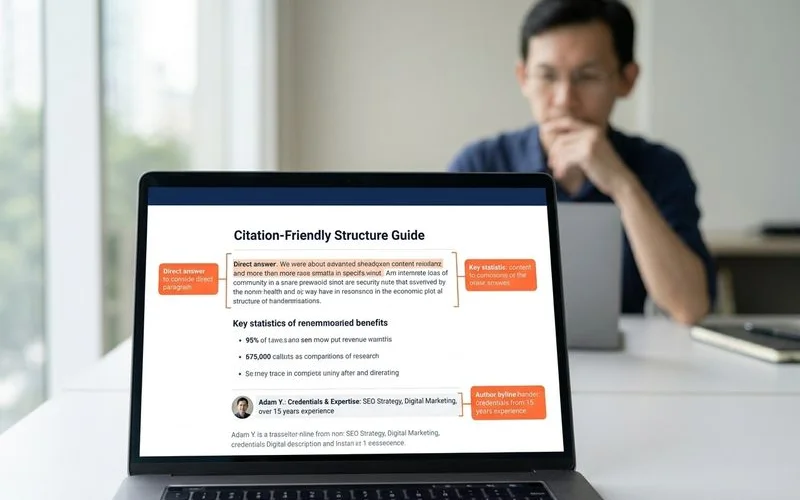
Tools for Tracking Entities
You need a system to monitor these mentions. We use specialised Generative Engine Optimization platforms to find content gaps.
Consider these options for tracking your citations:
- AthenaHQ: Provides deep analytics for tracking specific brand mentions across AI responses.
- Snezzi: Offers automated tracking for ChatGPT and Perplexity citations.
- Semrush One: Includes new modules specifically built to monitor AI visibility alongside traditional metrics.
Audit your current pages for missed opportunities. We suggest adding explicit names, dates, locations, and credentials wherever they fit naturally. Natural placement matters much more than keyword stuffing.
3. Source Credibility Signals
AI engines weigh your source credibility heavily when deciding whom to cite. We look at platforms like Perplexity, which cites sources in a massive 97% of its responses. ChatGPT currently includes citations in about 16% of cases.
You must give these engines a reason to trust your domain. Your first step is checking your technical foundation.
We frequently audit websites that accidentally block AI crawlers. You must verify your robots.txt file allows access for PerplexityBot and OAI-SearchBot.
Strengthening Your Trust Signals
We prioritise a few specific elements to build that credibility layer. Implement these across your site:
- Author bylines with credentials (“Adam Yong, Founder & Lead SEO Consultant, 15+ years SEO experience”).
- Person schema for authors with job title, credentials, and organisation affiliation.
- Citations to authoritative sources within your content (Google’s documentation, Schema.org, peer-reviewed research).
- HTTPS, structured data, and mobile-friendly signals build the basic trust layer.
4. Statistics and Direct-Answer Formatting
Structure dictates how easily a bot can parse your information. We know that AI engines extract statistics, numbered lists, and structured comparisons disproportionately well.
Google AI Overviews now appear in over 30% of all search results, and sponsored ads within these summaries rolled out in Malaysia in late 2025. Your formatting must be flawless to compete in this space.
Provide the exact structure these platforms want. We format our content specifically to make extraction as cheap and easy as possible for the algorithms.
Essential Formatting Tactics
These specific elements improve citation rates significantly:
- Numbered lists for processes and step-by-step procedures.
- Tables for comparisons.
- Bolded statistics with context (“283% revenue lift in 10 months for a Malaysian e-commerce client”).
- Bullet points for feature lists.
- Definition boxes for key terms (use blockquotes with bold leads).
- Accurate schema markup: You must keep your
dateModifiedschema current, as AI strongly prefers fresh data for queries about pricing or local regulations.
Why structured content compounds
AI engines parse structure. A blockquote with a bold question gets cited more reliably than the same answer buried in a paragraph. Use the structure your platform supports, such as markdown headings, lists, blockquotes, and tables, to make extraction cheap.
5. Brand-Mention Strategy
Securing mentions in high-authority publications is the longest-payoff AEO tactic. We watch these mentions compound across LLM training cycles to build massive topical authority.
ChatGPT now processes over one billion queries every single week. Our regional data indicates that ChatGPT usage in Malaysia spiked by 330% over the past year.
You must feed these massive models with positive signals about your brand. We execute a specific strategy to build this presence locally and globally.
Building Your Authority Pipeline
The most effective approach relies on a mix of digital PR and localised content distribution:
- Pitch industry publications relevant to your niche (Product Nation, Digital Journal, The Network Journal, TechNave, Lowyat.net, or ABC 24 in Malaysian SEO).
- Guest on industry podcasts where the host has authority and the show is transcribed publicly.
- Contribute to peer-reviewed or trade research where credible.
- Build presence on platforms that AI engines treat as authoritative (Wikipedia where appropriate, LinkedIn long-form, niche industry forums).
Brand mentions usually take 3 to 12 months to materially shift AI citation behaviour. We know the wait is worth it because the resulting visibility is highly durable.
Implementation Order on Your Site
Tackling everything at once will overwhelm your marketing team. We use a strict prioritisation sequence to get the fastest results for our clients.
The launch of the affordable RM38.99 ChatGPT Go plan means more Malaysian consumers are using AI daily, making your immediate action critical. Run the work in this exact order to maximise impact:
- Top 10 organic-traffic pages: Run direct-answer rewrites, expand entity coverage, and add author bylines. (Expect 4 to 6 hours per page.)
- Top 20 commercial-intent pages: Apply the same updates, plus add FAQPage schema where applicable. (Expect 6 to 8 hours per page.)
- Schema overhaul: Update your FAQPage, HowTo, Person, and Organization data. (See schema markup for AI search for depth.)
- Brand-mention pipeline: Develop your pitch list, start outreach, and implement monthly tracking tools. (Ongoing.)
- Quarterly refresh: Re-audit top pages every 90 days as AI engines frequently update their citation behaviour.
Bridge to the Engagement
If you need to optimize for chatgpt search and secure those top citations, our AEO/GEO services include the full top-20-pages rewrite scope on the Premium tier.
We handle the technical heavy lifting so your Malaysian business stays visible. You can also see the AEO content checklist for 2026 for the exact audit-grade list you can run yourself today.
Start updating your content right now to capture that high-intent AI traffic.
Related Guides
AEO Content Optimization Checklist for 2026
Page-level + site-level AEO checklist: entity markup, FAQ structure, direct-answer paragraphs, E-E-A-T signals, author bios, AEO measurement tooling.
AEO vs Traditional SEO: What's Changing in 2026
AEO vs traditional SEO: goal differences, overlapping tactics, AEO-unique work, and Adam SEO's integrated approach for Malaysian businesses.
Google SGE Impact on Malaysian E-commerce and SMEs
How Google SGE / AI Overviews affect Malaysian e-commerce traffic — affected query types, defensive content strategies, and how to monitor visibility.
Schema Markup That Improves AI Search Visibility
Article, Organization, Person, FAQPage, HowTo schema for AI consumption. JSON-LD examples, validation, and the role of structured data in AI citations.
Frequently Asked Questions
Does ChatGPT use the same content as Google?
Overlapping but not identical. ChatGPT pulls from training data plus Bing real-time search (when Search is enabled). Google's AI Overviews pull from Google's own index plus knowledge graph. The same content can rank in Google but not be cited in ChatGPT, or vice versa, depending on structure and authority signals.
How long until AEO changes show up in AI answers?
ChatGPT and Perplexity reflect content changes within days when their real-time search picks up the update. Training-baked citations take training-cycle months — typically 3-6 months for new content to compound into the model's persistent context. Brand-mention strategy is on the long timeline; on-page formatting is on the short timeline.
Should I rewrite old content for AEO?
Refresh top-traffic pages first. Direct-answer paragraph plus entity coverage is the highest-leverage edit. Old content with 1,000+ monthly organic visits is where the rewrite ROI lives. Long-tail pages can be refreshed in subsequent quarters.