
AEO Content Optimization Checklist
Page-level + site-level AEO checklist: entity markup, FAQ structure, direct-answer paragraphs, E-E-A-T signals, author bios, AEO measurement tooling.
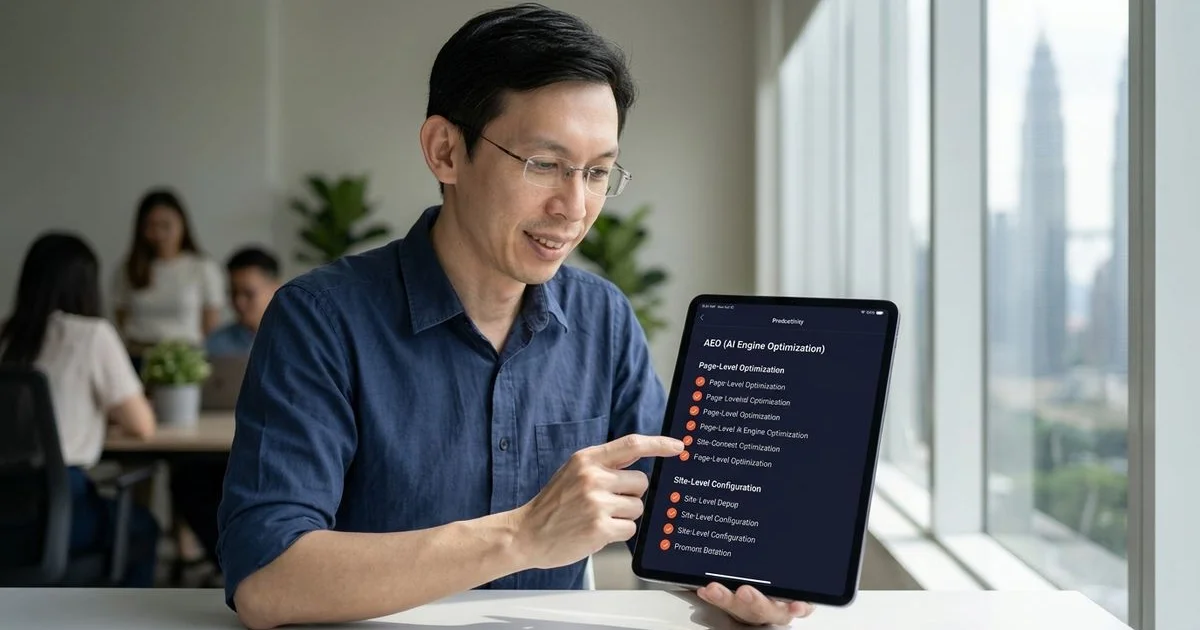
The Audit-Grade AEO Checklist
We have run Adam SEO since 2011, and the shift to Answer Engine Optimization (AEO) is the biggest disruption we have seen. Traditional organic traffic is dropping rapidly as AI overviews resolve queries directly on the search page. High search engine rankings alone no longer guarantee tangible business results.
Our recent data shows ChatGPT usage in Malaysia spiked 330% over the last year. Visitors referred by these AI engines convert at an impressive 14.2%. That figure is a massive jump from the 2.8% conversion rate of traditional search traffic.
We will break down the exact page-level and site-level optimisations you need to adapt.
AEO and GEO integrate into our 4-Stage 9-Step Framework as of September 2025. The checklist below is the audit phase output used before starting remediation work.
Page-Level Checklist (Top 20 Pages)
We run this checklist against your top 20 organic-traffic pages first. Focusing on high-impact pages delivers the fastest return on investment. Early 2026 data shows that 83% of AI-generated queries are now resolved without a click.
Our strategy focuses on direct, concise formatting to ensure you become the cited source. Each check below is a simple binary choice of pass or fail. This clear framework makes implementation straightforward for any team.
Direct-Answer Structure
We mandate that the first sentence of each major section provides an immediate answer. AI engines like Perplexity specifically look for 40 to 55-word blocks to generate citations. Long introductions confuse natural language processing models and hurt your visibility.
- First sentence of each major section directly answers the implicit question
- Sub-questions are framed as H2/H3 questions where relevant
- Long-form intros (4+ sentences) are removed in favor of immediate value
Entity Coverage
We ensure all entities are referenced explicitly with clear context. Mentioning specific local entities like SSM registration builds vital regional authority for Malaysian SMEs. Ambiguous terms force AI models to guess, often leading to your content being ignored entirely.
- All entities (people, places, brands, products) referenced explicitly with context
- Author byline with credentials visible
- Date stamps (published, updated) clear and current
- Citations to authoritative sources where claims warrant
FAQ Structure
We build a dedicated FAQ section on every core page to capture voice traffic. This format perfectly aligns with how local consumers dictate searches to mobile devices. Google heavily relies on this exact markup to populate the popular ‘People Also Ask’ sections.
- Page has a FAQ section with 3-5 question/answer pairs
- Each FAQ answer is a complete standalone response (1-3 sentences)
- FAQPage JSON-LD schema implemented and validated
Schema Markup
We deploy specific schema to help search engines understand the relationships between your data points. Clear architecture prevents frustrating crawling errors on complex e-commerce stores. This background code is essential for mapping your business to established entities in Wikidata.
- Article schema with author Person and publisher Organization
- FAQPage schema where FAQs exist
- HowTo schema where the page is a step-by-step process
- BreadcrumbList schema site-wide
Internal Linking
We carefully map internal links to distribute PageRank efficiently across your site. Generic anchor text like ‘click here’ wastes valuable context for Answer Engine Optimization. Connecting related topics signals strong topical authority to large language models.
- First link in each section goes to the most authoritative internal target
- Anchor text is descriptive and keyword-relevant
- Related guides or pillar links integrated naturally
Site-Level Checklist
We evaluate these broader site elements after securing your primary pages. Search engines use these signals to determine your complete brand trustworthiness. A solid foundation here amplifies the results of your individual content efforts.
E-E-A-T Foundations
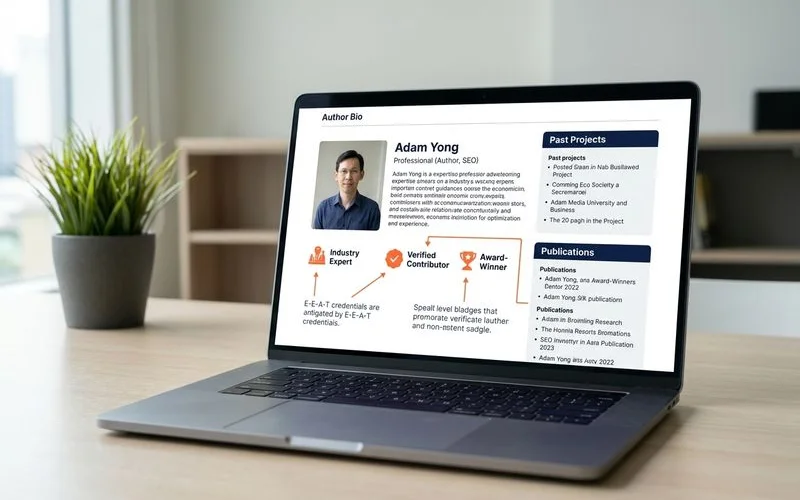
We verify that author archive pages include full bios to establish necessary trust. Recent 2026 data shows domains with authority scores above 80 are cited by AI 64% of the time. Contact information needs to be instantly verifiable, especially for local brick-and-mortar businesses.
- About page covers organizational expertise and history
- Author archive pages with full bios and credentials
- Person schema for each author including credentials and affiliations
- Privacy policy and terms current and substantive
- Contact information clear and verifiable
Brand Mentions Pipeline
We identify a target list of high-authority publications to build your off-site reputation. Third-party validation is a primary ranking factor in the new search landscape. These external signals directly feed into how systems like ChatGPT evaluate your brand.
- Identified target list of high-authority publications in your niche
- Outreach pipeline with quarterly cadence
- Tracking spreadsheet of earned mentions
- Re-citation work for mentions that haven’t been picked up by AI engines
Schema at Scale
We configure comprehensive Organization schema to solidify your digital footprint. Proper markup maps your business directly to the knowledge graph. This localized code is absolutely essential for regional enterprises targeting Malaysian consumers.
- Organization schema on homepage
- WebSite schema with sitelinks search box
- BreadcrumbList on every non-homepage URL
- LocalBusiness schema if applicable to your business model
Measurement Infrastructure
We configure specialized platforms like Otterly.ai for precise visibility tracking. A recent 2026 Goodfirms study found that only 14% of marketers actively track AI visibility metrics. Regular audits ensure you do not lose ground to faster-moving competitors.
- Profound or Otterly.ai account configured
- Quarterly manual sampling protocol documented
- GSC monitoring for SGE-impacted query CTR drops
- Quarterly AEO refresh cadence on calendar
Quarterly Refresh Cadence
We mandate a quarterly refresh because AI engines update their citation behaviour continuously. Content cited reliably in Q1 may stop being cited in Q3 if a competitor with stronger entity coverage emerges. Underlying models frequently retrain with entirely different weighting systems.
Why quarterly matters
AI engines update citation behavior continuously. Content cited reliably in Q1 may stop being cited in Q3 if a competitor with stronger entity coverage emerges or if the underlying model retrains with different weighting. Quarterly refresh keeps your top pages competitive in the AI-citation layer.
We follow a strict quarterly routine to prevent sudden drops in valuable referral traffic. Staying proactive is much easier than recovering from lost visibility. Studies from late 2025 indicate a massive 47% reduction in organic clicks when an AI Overview is present, making this refresh critical.
- Re-run page-level checklist on top 20 pages
- Add new direct-answer paragraphs for emerging sub-queries
- Refresh statistics and dates to current
- Audit FAQ section for new common questions
- Validate schema after any platform updates
- Sample AI engines on representative queries; document citation status
Tooling Spend
We recommend specific tools to measure Answer Engine Optimization effectively. Standard SEO software simply cannot track AI citations reliably. These specialized platforms provide the exact data needed for regional enterprises to thrive.
| Tool | Purpose | 2026 Pricing | Worth it for |
|---|---|---|---|
| Profound | Citation tracking | $200-500/mo | Established brands wanting visibility metrics |
| Otterly.ai | Citation monitoring | $99-299/mo | SMEs starting AEO measurement |
| Ahrefs/SEMrush | Authority + competitive | $150-500/mo | Required for traditional SEO too |
| Schema App | Schema management | $40-150/mo | Stores with 100+ pages requiring schema at scale |
| Perplexity Pro | Research & query testing | $20/mo | Teams researching exact AI retrieval behaviours |
| ChatGPT Plus/Go | Market testing | RM38.99/mo | Local SMEs monitoring conversational responses |
We evaluate this tooling spend annually to ensure highly positive returns. Investing in proper measurement prevents wasted effort on invisible content. Your budget should directly align with your specific market goals.
Bridge to the Engagement
We consider this checklist to be your foundational starting audit. The remediation is the actual strategic engagement. Implementing these changes requires dedicated technical resources and time.
Our AEO/GEO services include the page-level and site-level work end-to-end on Premium and Elite tiers. Quarterly refreshes are built directly into the ongoing retainer. Consistent optimisation is the only proven way to dominate the 2026 search landscape, so contact our team today to schedule your initial site audit.
Related Guides
AEO vs Traditional SEO: What's Changing in 2026
AEO vs traditional SEO: goal differences, overlapping tactics, AEO-unique work, and Adam SEO's integrated approach for Malaysian businesses.
Google SGE Impact on Malaysian E-commerce and SMEs
How Google SGE / AI Overviews affect Malaysian e-commerce traffic — affected query types, defensive content strategies, and how to monitor visibility.
How to Optimize Content for ChatGPT and Perplexity Search
Practical AEO/GEO tactics: citation-friendly structure, entity coverage, source signals, statistics formatting, brand-mention strategies.
Schema Markup That Improves AI Search Visibility
Article, Organization, Person, FAQPage, HowTo schema for AI consumption. JSON-LD examples, validation, and the role of structured data in AI citations.
Frequently Asked Questions
How often should I refresh AEO-targeted content?
Quarterly for top-traffic pages. Biannually for the rest. AI engines update their citation behavior continuously, and content that was cited 6 months ago may no longer be cited today. Quarterly cadence catches drift before it costs material visibility.
Do I need an author bio on every page?
On every editorial and long-form page, yes. Product and category pages can use Organization-level signals (Organization schema, About page authority). Authors with credentials and Person schema raise citation probability for content where source credibility matters most — which is most editorial content.
Which AEO tools are worth paying for in 2026?
Profound for citation tracking. Otterly.ai for monitoring. Both are still maturing — coverage gaps exist. Don't pay for tools claiming guaranteed AI visibility metrics; they overpromise. Use the available tools as one input among manual sampling and quarterly review.