
E-commerce SEO Malaysia: Scale Your Online Store for Revenue

Platform-aware SEO for online stores — product page optimization, faceted-navigation control, and schema markup that converts.

From RM 3,500 per month
E-commerce SEO Services
4.9 (120+ Google Reviews)
ROI-Focused Strategy
Reply Within 1 Business Day
15+ Years SEO Experience
Sound Familiar?

Signs Your E-commerce SEO Needs Attention

These are the warning signs we see most often in our discovery audits.

Product pages rank for nothing because faceted navigation is bloating your indexed URL count

Your Shopify or WooCommerce store has technical traps you can't spot without the right audit tools

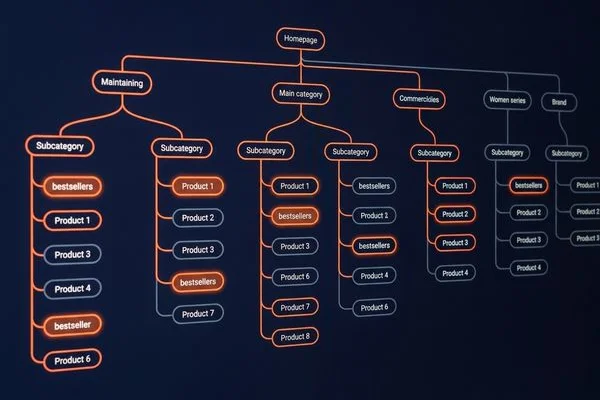
Category architecture is diluting authority instead of compounding it toward your top-revenue pages

Paid ads are eating margin while organic traffic flatlines — you need to own the traffic long-term

E-commerce SEO Services Are Not the Same as Informational SEO

Have you ever wondered why your store traffic isn’t translating into actual sales, and whether specialized E-commerce SEO Services could fix it? Many local shop owners feel that frustration when they see visitors browsing but not buying. We see this all the time with regional businesses.

Since our founding in 2011 by SEO veteran Adam Yong, Adam SEO has operated on one simple premise: search engine rankings mean nothing without tangible business growth. This guide will walk you through the exact steps needed to turn things around.

Traffic is only valuable when it converts into revenue.

Most general agencies treat e-commerce sites just like regular content blogs, which is exactly why their results eventually plateau.

We treat every single section of your store as a distinct, critical discipline.

Why Product Pages and Category Pages Need Different Strategies

A recent 2025 report from mili.eu reveals that 86% of Malaysian shoppers buy online at least monthly.

Getting those eager shoppers to your site is just the first step.

Our approach ensures your product pages speak directly to buyers who are ready to spend.

  • Transactional modifiers: Words like “buy” or “discount.”
  • Price-based queries: Searches for “cheap” or specific price points.
  • Local intent: Phrases ending with “near me” or “in Kuala Lumpur.”
  • Brand combinations: Specific brand names paired with the product type.

Category pages serve a completely different purpose.

They act as the foundational pillars where your website’s authority compounds over time.

We optimize these category pages to capture broader search terms and guide users smoothly toward individual products.

Faceted navigation is the number one cause of index bloat for growing e-commerce stores, often hiding duplicate content in plain sight.

Another hidden trap is faceted navigation.

Those helpful color, size, and price filters can create thousands of duplicate URLs.

This technical bloat quietly fills the search index until Google demotes the entire site for low quality.

A Real Malaysian Case Study: 283% Revenue Lift

The case study most clients ask about is our work with a regional e-commerce client.

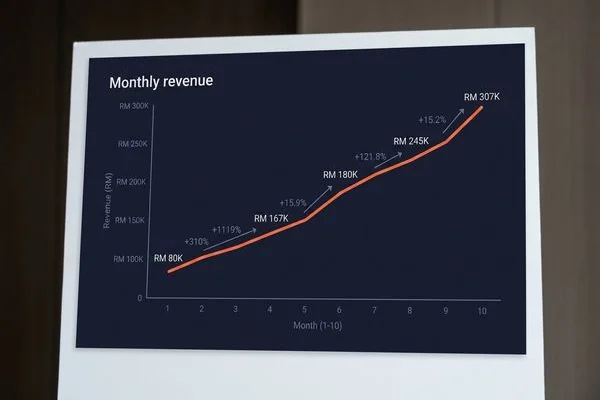
Over 10 months, they experienced a massive 283% revenue lift.

We discovered early on that their technical foundation was actively working against them.

Project PhaseAction TakenThe Direct Benefit
Stage 1: Index Clean-upFound 60% of indexed URLs were random filter combinations instead of clean product pages.Removed index bloat so search engines ranked actual products.
Stage 2: CRO & Trust SignalsRewrote category page intros and added local trust signals to product pages.Addressed the high 73.5% Malaysian cart abandonment rate by building buyer confidence.
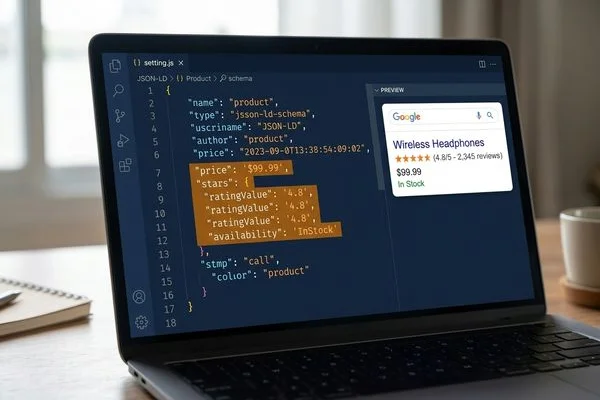
Stage 3: Schema ImplementationAdded Product, Offer, and AggregateRating schema across the entire catalog.Helped products stand out in search results with eye-catching star ratings and pricing.
Stage 4: Cart RetargetingRetargeted abandoned-cart visitors with specific messages.Captured lost sales and improved total store conversion rates.

Monthly revenue jumped from RM 80K to RM 307K.

This growth compounded long after the engagement ended because the core architecture was finally sound.

Platform Matters Less Than Execution

Shopify, WooCommerce, and Magento can all rank exceptionally well.

Our team has shipped significant, verifiable wins on all three platforms.

What truly matters is whether the person handling your account knows the hidden, platform-specific traps.

PlatformCommon SEO TrapHow to Fix It
ShopifyDuplicate content from faceted navigation. Products often generate two URLs, such as /collections/shirts/products/blue-tee and the clean /products/blue-tee.Edit your theme files to force all internal links to use the clean /products/ canonical URL.
WooCommerceProduct variation URLs create thin, unhelpful pages for every single size and color combination.Use SEO plugins to consolidate these variations under a single, authoritative product page.
MagentoFaceted navigation creates massive crawl budget waste through endless parameter strings.Strictly configure your URL parameters inside Google Search Console and apply rigid canonical tags.

These specific gotchas live permanently in our audit playbooks.

We have hit each of them on real-world client engagements.

Ignoring these platform defaults is a common mistake that quietly suppresses rankings while competitors steal your traffic.

Conclusion

Fixing your online store’s visibility starts with recognizing that e-commerce SEO requires a specialized touch.

Your product and category pages are the powerful engines driving your business.

We know exactly how to fine-tune them for maximum search performance. Here is what you can expect when working with us:

  • Clear communication on technical fixes.
  • Data-driven improvements for your product pages.
  • A focus on actual revenue, not just traffic.

Reach out to discuss our E-commerce SEO Services today, and let us start building your revenue.

What's Included

Every E-commerce SEO Engagement Covers

  • Site architecture and category-tree audit (Shopify, WooCommerce, Magento)
  • Product page on-page optimization (title, H1, meta, schema)
  • Product, Offer, Review, and AggregateRating schema implementation
  • Faceted-navigation crawl control (canonical, robots, parameter handling)
  • Out-of-stock URL management and 404/410 strategy
  • Internal linking from categories to bestsellers (link equity flow)
  • International e-commerce hreflang setup for Malaysia + ASEAN
  • Image SEO (filenames, alt, lazy load, structured data)
E-commerce SEO Services service in action
Pricing

E-commerce SEO Pricing Tiers

Transparent monthly retainers. Selective intake means honest scope conversations before you sign.

Standard

RM 3,500 /month
  • Up to 30 keywords
  • Product page optimization (top 10)
  • Schema markup baseline
  • 2 content assets per month
Request a Quote
Most Popular

Premium

RM 4,500 /month
  • Up to 80 keywords
  • Product + category page work
  • Faceted-nav crawl control
  • 4-6 content assets per month
  • CRO on PDPs
Request a Quote

Elite

RM 9,500 /month
  • 120+ keywords + topic clusters
  • Full catalog optimization
  • Digital PR for category authority
  • 8-12 content assets per month
  • Direct monthly call with Adam Yong
Request a Quote
Why Choose Us

What Makes Our E-commerce SEO Different

Platform-Specific Expertise

Shopify's robots.txt limits, WooCommerce's product variation URLs, Magento's faceted navigation — we know the gotchas in each.

Documented Revenue Lift

10-month case study: RM 80K to RM 307K monthly revenue (283% lift) on a Malaysian e-commerce client.

Schema Done Right

Product, Offer, Review, AggregateRating all validated against Rich Results Test. RM pricing in Offer schema for Malaysian rich results.

Crawl Budget Discipline

Most e-commerce sites we audit have 10x more indexed pages than products. We fix that before content work begins.

Process

How Our E-commerce SEO Engagement Works

1

Catalog Audit

Crawl your full catalog with Screaming Frog, surface duplicate content, broken canonicals, faceted-nav bloat, and product-page gaps.

2

Architecture Fixes

Category-tree restructure, canonical strategy, robots.txt cleanup, and parameter-handling rules to control crawl budget.

3

Product Page Optimization

Title and H1 patterns, schema markup (Product + Offer + Review + AggregateRating), image SEO, and internal-linking from categories.

4

Authority and Iteration

Category-page link building, content marketing for top-of-funnel awareness, and quarterly architecture refresh as catalog grows.

Not Sure Where Your E-commerce SEO Is Falling Short?

A free discovery audit tells you exactly what is blocking your rankings and where the next 90 days of compounding can come from. No commitment required.

Get My Free SEO Audit

E-commerce SEO in Practice

E-commerce SEO example

What E-commerce SEO Clients Say

Real results from real Malaysian businesses.

“We came in obsessed with rankings. Adam reframed the whole engagement around revenue, and within 8 months our monthly e-commerce sales went from RM 80K to over RM 300K. The 4-Stage Framework is the real deal.”
D
Daniel L.
Kuala Lumpur
“The AEO/GEO work was the differentiator we needed. Our brand started appearing in ChatGPT and Perplexity answers within 4 months. Forward-thinking team.”
W
Wei Han C.
Kuala Lumpur

E-commerce SEO FAQs

Which platforms do you specialize in?

Shopify, WooCommerce, and Magento are our primary platforms. We also work with Wix, Squarespace, and custom Astro/Next.js builds. The 4-Stage Framework adapts; the platform-specific gotchas are baked into our audit playbooks.

Do you work with stores selling internationally from Malaysia?

Yes — particularly stores selling into Singapore via the JB causeway, plus broader ASEAN. Hreflang setup, currency display, and dual-market keyword strategy are standard.

How long until e-commerce SEO drives revenue?

Technical wins (faster pages, fixed canonicals) often surface in month 1. Product-page ranking movement starts month 2-3. Significant revenue inflection typically lands months 4-8 — the 283% case study took 10 months end-to-end.

Do I need to migrate platforms for SEO to work?

Almost never. Shopify, WooCommerce, and Magento are all SEO-capable in skilled hands. We only recommend migration when the existing platform has fundamental architectural blockers.

What about Google Shopping Ads — do you do those too?

Not directly — we are SEO-focused. We coordinate with your Shopping Ads team or recommended partners to ensure organic and paid strategies reinforce each other. Hybrid is usually the right answer.

What if I have 10,000+ products?

Catalog scale changes the priority list, not the framework. We focus authority work on top-revenue categories first, automate product-page schema and meta patterns, and use rule-based optimization for the long tail.

Ready to Engage on E-commerce SEO?

Free discovery audit. We will tell you in writing whether this is the right scope for your business or recommend a different fit.