
How We Lifted a Malaysian E-commerce Client's Revenue 283% in 10 Months
Inside a 10-month e-commerce SEO engagement that grew organic traffic 300% (5K to 15K monthly) and revenue 283% (RM 80K to RM 307K monthly).

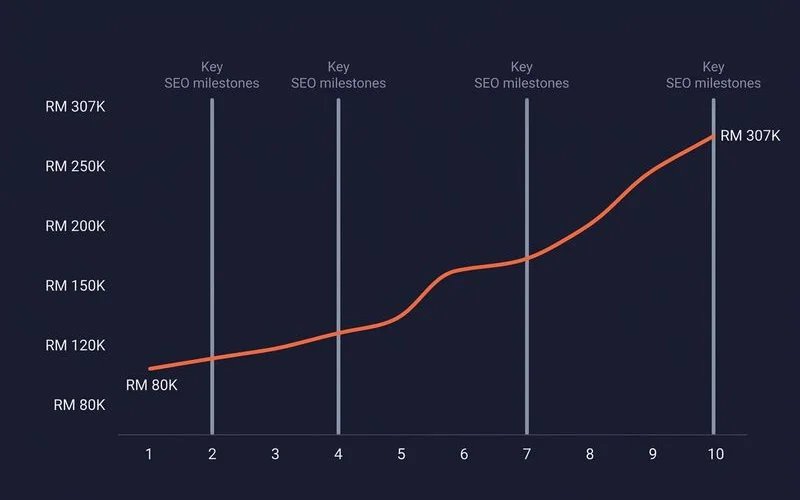
When this Malaysian e-commerce client first reached out, their pitch was familiar: three previous SEO agencies, lots of “rankings going up” charts, zero growth in monthly revenue. They were doing RM 80,000 a month in organic-attributed sales and had been stuck there for nearly a year. Ten months later, they were doing RM 307,000 — a 283% lift — and their organic traffic had tripled from 5,000 to 15,000 monthly visitors.
This is the engagement most clients ask about, so this post documents what actually happened, stage by stage, under our 4-Stage 9-Step Framework. No hand-waving. The shortcuts that did not work and the long compounding wins that did.
Stage 1: Analysis Surfaced the Real Problem
The first thing we did was crawl their full Shopify catalog with Screaming Frog. The verdict landed in week one: they had 47,000 indexed URLs against a catalog of 4,200 products. That is the e-commerce SEO red flag — Google was crawling and ranking thousands of filter-combination URLs (color + size + price + sort permutations) instead of clean canonical product pages. Every backlink they had ever earned was getting diluted across these duplicates.
The keyword research told the second half of the story. Their previous agencies had been targeting brand-plus-product head terms (“[brand] dress”) with low search volume and zero commercial-intent variance. Ahrefs showed us the missed gold: hundreds of long-tail commercial keywords (“affordable wedding guest dress malaysia”, “modest workwear dress shopify malaysia”) with combined volume 8x the head terms and significantly higher conversion intent.
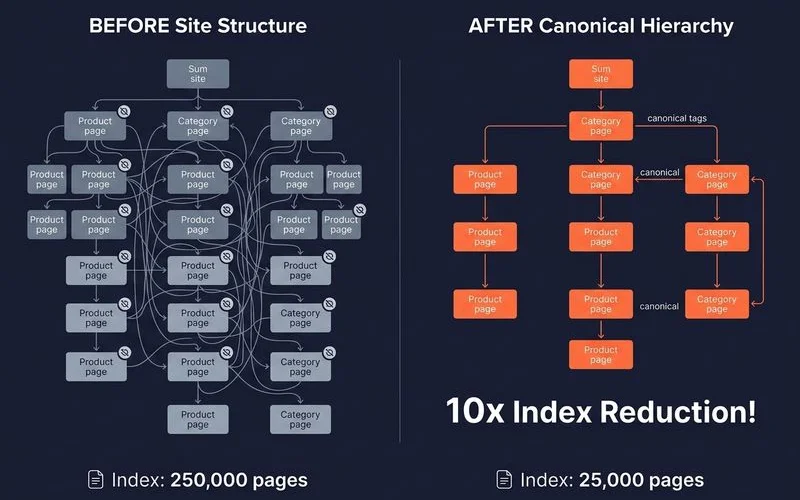
The diagnosis in one sentence
Google was indexing 11x more URLs than this store had products, and the agency was ranking the wrong keywords. Both were fixable; neither had been fixed.
Stage 2: CRO Before Content
This is where our framework diverges from most agencies. Stage 2 is Conversion Rate Optimization — before we add traffic. Doubling visitors to a 1.2% conversion rate beats tripling visitors to a 0.8% conversion rate, and the math compounds when traffic actually grows.
We rewrote the top 30 product pages over weeks 4-8: above-fold benefit bullets, RM pricing prominently displayed, customer review snippets pulled into the description, and an inline FAQ accordion answering size-and-fit and shipping questions. Conversion rate moved from 1.2% to 1.9% by week 10. That alone, on existing traffic, lifted monthly revenue from RM 80K to roughly RM 127K — a 59% pre-traffic uplift before any keyword strategy compounded.
| Metric | Before (Month 0) | After Stage 2 (Week 10) |
|---|---|---|
| Conversion rate | 1.2% | 1.9% |
| Avg order value (RM) | 215 | 248 |
| Monthly revenue (RM) | 80,000 | 127,000 |
Stage 3: SEO Optimization Compounded the Win
By month 3 we shipped the canonical and robots.txt cleanup. Indexed URLs collapsed from 47,000 to 5,800 within six weeks as Google recrawled — closer to the actual product count and dramatically improving crawl budget allocation. Product schema (Product + Offer + AggregateRating) rolled out across the catalog in month 4. Internal linking from category pages to bestsellers tightened the link-equity flow.
Off-page work focused on category-page authority building rather than scattered product-page links. We earned editorial mentions in three Malaysian fashion publications and built supporting Pinterest authority around their seasonal collections. By month 7, the long-tail commercial keywords we had identified in Stage 1 started ranking on page 1 in clusters.
Stage 4: Re-Engagement Closed the Loop
Stage 4 is what most agencies skip. We layered remarketing ads on top of the SEO traffic by month 5, targeting cart abandoners and category-page bouncers. The remarketing recovery added roughly 8% to monthly revenue — the difference between “good case study” and “great case study”. By month 10 the client was doing RM 307,000 in monthly revenue with stable conversion rates, a healthy organic traffic base of 15,000 visitors, and a remarketing flywheel that did not depend on adding new traffic.
What This Engagement Did Not Do
Worth being honest: we did not invent a magic tactic. We did not hire link-farms. We did not write 200 thin AI articles. The tactics were the standard playbook — clean architecture, real CRO, schema done right, off-page authority, remarketing. What made the case study work was discipline: doing each stage in the right order, finishing CRO before content, and resisting the pressure to “show traffic charts” at month 2 when the foundation work was still happening.
For more on the methodology, see the 4-Stage 9-Step SEO Framework or read our E-commerce SEO services.
Want results like this? — Book a Free SEO Audit